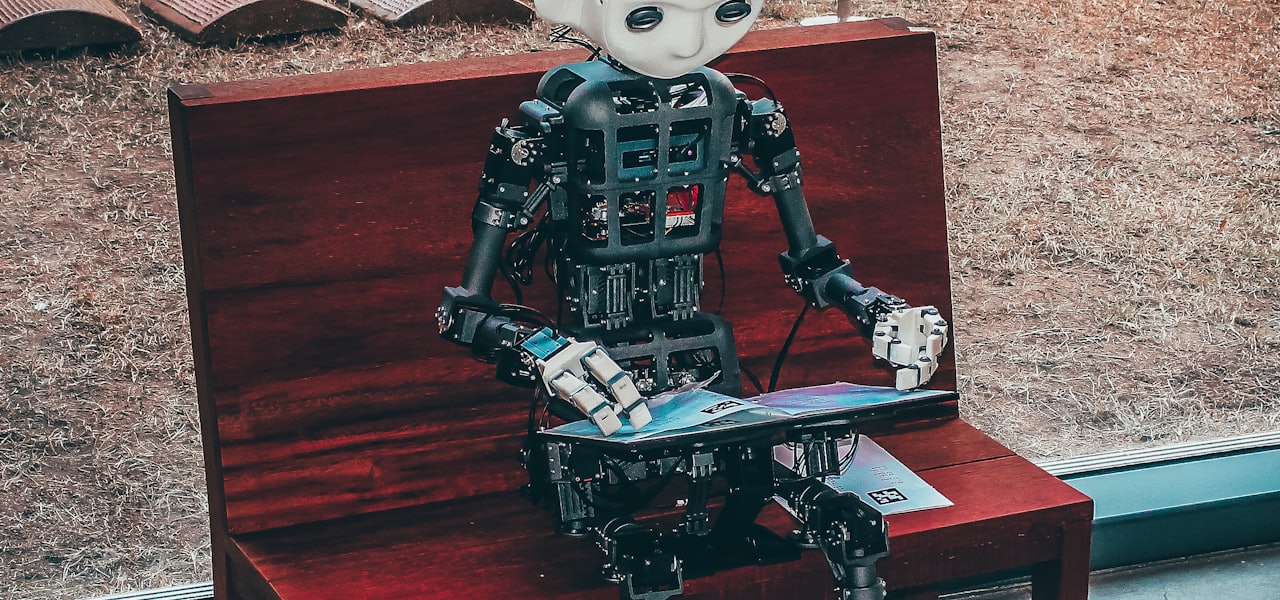
Armin Bernd Cremers (born June 7, 1946) is a German mathematician and computer scientist. He is a professor in the computer science institute at the University of Bonn, Germany. He is most notable for his contributions to several fields of discrete mathematics including formal languages and automata theory. In more recent years he has been recognized for his work in artificial intelligence, machine learning and robotics as well as in geoinformatics and deductive databases. == Life and work == Armin B. Cremers studied mathematics and physics at the University of Karlsruhe, Germany. After his graduate diploma (1971) and PhD (1972), both in mathematics, both summa cum laude, he received his academic lectureship qualification for computer science (1974), all from the University of Karlsruhe. Following an invitation by Seymour Ginsburg, he joined the University of Southern California (USC), Los Angeles, in 1973 where he worked until 1976 as an assistant professor of electrical engineering and computer science. With Ginsburg he initiated Grammar Forms, a new formalism for grammatical families. In 1976 A. B. Cremers returned to Germany and was appointed to full professor of computer science at the University of Dortmund, where he remained until 1990, holding the chair for information systems. During the same time he continued working as a visiting research professor at USC, where together with Thomas N. Hibbard he developed the concept of Data Spaces, a comprehensive computational model, in theory and applications. At the University of Dortmund A. B. Cremers served as chairman of the computer science department and, since early 1985, as vice president for Research and Junior Scientific Staff. In this position he was liaison for the development of the Technology Center Dortmund Archived 2021-05-09 at the Wayback Machine. He was the initiator and founding director of the Center for Expert Systems Dortmund (ZEDO) and the NRW State Research Collaborative in Artificial Intelligence (KI-NRW). From 1988 to 1996 he was also a member of the supervisory board of the German National Research Center for Mathematics and Data Processing (GMD). Since 1990 A. B. Cremers has been professor and director of computer science and head of the research group in artificial intelligence at the University of Bonn. From Bonn he has contributed fundamentally to artificial intelligence and robotics (with Wolfram Burgard, Dieter Fox, Sebastian Thrun among his students), and to the development of software engineering, particularly in civil engineering, and information systems, particularly in the geosciences. The paper "The Interactive Museum Tour-Guide Robot" won the AAAI Classic Paper award of 2016. Together with Matthias Jarke A. B. Cremers established the Bonn-Aachen International Center for Information Technology (B-IT) in 2001 and led this as Founding Scientific Director from the University of Bonn side until his retirement from teaching in 2014. From 2004 to 2008 Cremers was Dean of the School of Mathematics and Natural Sciences, and from April 2009 to July 2014 University Vice President for Planning and Finance. He is member of advisory boards, e.g., as well as Chairman of the University Council of the University of Koblenz-Landau.
Foveated imaging
Foveated imaging is a digital image processing technique in which the image resolution, or amount of detail, varies across the image according to one or more "fixation points". A fixation point indicates the highest resolution region of the image and corresponds to the center of the eye's retina, the fovea. The location of a fixation point may be specified in many ways. For example, when viewing an image on a computer monitor, one may specify a fixation using a pointing device, like a computer mouse. Eye trackers which precisely measure the eye's position and movement are also commonly used to determine fixation points in perception experiments. When the display is manipulated with the use of an eye tracker, this is known as a gaze contingent display. Fixations may also be determined automatically using computer algorithms. Some common applications of foveated imaging include imaging sensor hardware and image compression. For descriptions of these and other applications, see the list below. Miniaturized foveated imaging systems can be realized by high-resolution 3D printing of multi-lens objectives directly on a CMOS (Complementary metal-oxide-semiconductor) chip. Foveated imaging is also commonly referred to as space variant imaging or gaze contingent imaging. == Applications == === Compression === Contrast sensitivity falls off dramatically as one moves from the center of the retina to the periphery. In lossy image compression, one may take advantage of this fact in order to compactly encode images. If one knows the viewer's approximate point of gaze, one may reduce the amount of information contained in the image as the distance from the point of gaze increases. Because the fall-off in the eye's resolution is dramatic, the potential reduction in display information can be substantial. Also, foveation encoding may be applied to the image before other types of image compression are applied and therefore can result in a multiplicative reduction. === Foveated sensors === Foveated sensors are multiresolution hardware devices that allow image data to be collected with higher resolution concentrated at a fixation point. An advantage to using foveated sensor hardware is that the image collection and encoding can occur much faster than in a system that post-processes a high resolution image in software. === Simulation === Foveated imaging has been used to simulate visual fields with arbitrary spatial resolution. For example, one may present video containing a blurred region representing a scotoma. By using an eye-tracker and holding the blurred region fixed relative to the viewer's gaze, the viewer will have a visual experience similar to that of a person with an actual scotoma. === Video gaming === Foveated rendering is a rendering optimization technique which uses an eye tracker integrated with a virtual reality headset to reduce the rendering workload by greatly reducing the image quality in the peripheral vision (outside of the zone gazed by the fovea).. However, other than the near-eye displays (e.g., virtual reality headset), foveated rendering is also suitable for large high-resolution display walls, desktop monitor, and even for smart phones. Over the time different foveated rendering techniques are proposed, for instance, adaptive resolution, geometric simplification, shading simplification and chromatic degradation, spatio-temporal deterioration . If we consider the variable sample distribution of physically-based rendering under the shader (e.g., hit/miss etc.), then this degradation strategies are applied on overall foveated rendering. At the CES 2016, SensoMotoric Instruments (SMI) demoed a new 250 Hz eye tracking system and a working foveated rendering solution. It resulted from a partnership with camera sensor manufacturer Omnivision who provided the camera hardware for the new system. The Apple Vision Pro mixed reality headset features dynamic foveated rendering provided by its visionOS operating system. === Quality assessment === Foveated imaging may be useful in providing a subjective image quality measure. Traditional image quality measures, such as peak signal-to-noise ratio, are typically performed on fixed resolution images and do not take into account some aspects of the human visual system, like the change in spatial resolution across the retina. A foveated quality index may therefore more accurately determine image quality as perceived by humans. === Image database retrieval === In databases that contain very high resolution images, such as a satellite image database, it may be desirable to interactively retrieve images in order to reduce retrieval time. Foveated imaging allows one to scan low resolution images and retrieve only high resolution portions as they are needed. This is sometimes called progressive transmission. == Example images ==
Principle of rationality
The principle of rationality (or rationality principle) was coined by Karl R. Popper in his Harvard Lecture of 1963, and published in his book Myth of Framework. It is related to what he called the 'logic of the situation' in an Economica article of 1944/1945, published later in his book The Poverty of Historicism. According to Popper's rationality principle, agents act in the most adequate way according to the objective situation. It is an idealized conception of human behavior which he used to drive his model of situational analysis. Cognitive scientist Allen Newell elaborated on the principle in his account of knowledge level modeling. == Popper == Popper called for social science to be grounded in what he called situational analysis or situational logic. This requires building models of social situations which include individual actors and their relationship to social institutions, e.g. markets, legal codes, bureaucracies, etc. These models attribute certain aims and information to the actors. This forms the 'logic of the situation', the result of reconstructing meticulously all circumstances of an historical event. The 'principle of rationality' is the assumption that people are instrumental in trying to reach their goals, and this is what drives the model. Popper believed that this model could be continuously refined to approach the objective truth. Popper called his principle of rationality nearly empty (a technical term meaning without empirical content) and strictly speaking false, but nonetheless tremendously useful. These remarks earned him a lot of criticism because seemingly he had swerved from his famous Logic of Scientific Discovery. Among the many philosophers having discussed Popper's principle of rationality from the 1960s up to now are Noretta Koertge, R. Nadeau, Viktor J. Vanberg, Hans Albert, E. Matzner, Ian C. Jarvie, Mark A. Notturno, John Wettersten, Ian C. Böhm. == Newell == In the context of knowledge-based systems, Newell (in 1982) proposed the following principle of rationality: "If an agent has knowledge that one of its actions will lead to one of its goals, then the agent will select that action." This principle is employed by agents at the knowledge level to move closer to a desired goal. An important philosophical difference between Newell and Popper is that Newell argued that the knowledge level is real in the sense that it exists in nature and is not made up. This allowed Newell to treat the rationality principle as a way of understanding nature and avoid the problems Popper ran into by treating knowledge as non physical and therefore non empirical.
List of artificial intelligence journals
This is a list of notable peer-reviewed academic journals that publish research in the field of artificial intelligence (AI), including areas such as machine learning, computer vision, natural language processing, robotics, and intelligent systems. == General artificial intelligence == Artificial Intelligence (journal) – Elsevier Journal of Artificial Intelligence Research (JAIR) – AI Access Foundation Knowledge-Based Systems – Elsevier == Machine learning == Data Mining and Knowledge Discovery – Springer Machine Learning (journal) – Springer Journal of Machine Learning Research – Microtome Pattern Recognition (journal) – Elsevier Neural Networks (journal) – Elsevier Neural Computation (journal) – MIT Press Neurocomputing (journal) - Elsevier == Deep learning and neural computation == IEEE Transactions on Evolutionary Computation – IEEE IEEE Transactions on Neural Networks and Learning Systems – IEEE Nature Machine Intelligence – Springer Nature == Computer vision == International Journal of Computer Vision – Springer IEEE Transactions on Pattern Analysis and Machine Intelligence – IEEE Machine Vision and Applications – Springer == Natural language processing == Computational Linguistics (journal) – MIT Press Natural Language Processing Transactions of the Association for Computational Linguistics – ACL == Robotics and intelligent systems == IEEE Transactions on Robotics – IEEE Autonomous Robots – Springer Journal of Intelligent & Robotic Systems – Springer == Interdisciplinary and ethics in AI == AI & Society – Springer Artificial Life – MIT Press Philosophy & Technology – Springer Minds and Machines – Springer
Dynamic epistemic logic
Dynamic epistemic logic (DEL) is a logical framework dealing with knowledge and information change. Typically, DEL focuses on situations involving multiple agents and studies how their knowledge changes when events occur. These events can change factual properties of the actual world (they are called ontic events): for example a red card is painted in blue. They can also bring about changes of knowledge without changing factual properties of the world (they are called epistemic events): for example, a card is revealed publicly (or privately) to be red. Originally, DEL focused on epistemic events. Only some of the basic ideas are present in this entry of the original DEL framework; more details about DEL in general can be found in the references. Due to the nature of its object of study and its abstract approach, DEL is related and has applications to numerous research areas, such as computer science (artificial intelligence), philosophy (formal epistemology), economics (game theory) and cognitive science. In computer science, DEL is for example very much related to multi-agent systems, which are systems where multiple intelligent agents interact and exchange information. As a combination of dynamic logic and epistemic logic, dynamic epistemic logic is a young field of research. It really started in 1989 with Plaza's logic of public announcement. Independently, Gerbrandy and Groeneveld proposed a system dealing moreover with private announcement and that was inspired by the work of Veltman. Another system was proposed by van Ditmarsch whose main inspiration was the Cluedo game. But the most influential and original system was the system proposed by Baltag, Moss and Solecki. This system can deal with all the types of situations studied in the works above and its underlying methodology is conceptually grounded. This entry will present some of its basic ideas. Formally, DEL extends ordinary epistemic logic by the inclusion of event models to describe actions, and a product update operator that defines how epistemic models are updated as the consequence of executing actions described through event models. Epistemic logic will first be recalled. Then, actions and events will enter into the picture and we will introduce the DEL framework. == Epistemic logic == Epistemic logic is a modal logic dealing with the notions of knowledge and belief. As a logic, it is concerned with understanding the process of reasoning about knowledge and belief: which principles relating the notions of knowledge and belief are intuitively plausible? Like epistemology, it stems from the Greek word ϵ π ι σ τ η μ η {\displaystyle \epsilon \pi \iota \sigma \tau \eta \mu \eta } or ‘episteme’ meaning knowledge. Epistemology is nevertheless more concerned with analyzing the very nature and scope of knowledge, addressing questions such as “What is the definition of knowledge?” or “How is knowledge acquired?”. In fact, epistemic logic grew out of epistemology in the Middle Ages thanks to the efforts of Burley and Ockham. The formal work, based on modal logic, that inaugurated contemporary research into epistemic logic dates back only to 1962 and is due to Hintikka. It then sparked in the 1960s discussions about the principles of knowledge and belief and many axioms for these notions were proposed and discussed. For example, the interaction axioms K p → B p {\displaystyle Kp\rightarrow Bp} and B p → K B p {\displaystyle Bp\rightarrow KBp} are often considered to be intuitive principles: if an agent Knows p {\displaystyle p} then (s)he also Believes p {\displaystyle p} , or if an agent Believes p {\displaystyle p} , then (s)he Knows that (s)he Believes p {\displaystyle p} . More recently, these kinds of philosophical theories were taken up by researchers in economics, artificial intelligence and theoretical computer science where reasoning about knowledge is a central topic. Due to the new setting in which epistemic logic was used, new perspectives and new features such as computability issues were then added to the research agenda of epistemic logic. === Syntax === In the sequel, A G T S = { 1 , … , n } {\displaystyle AGTS=\{1,\ldots ,n\}} is a finite set whose elements are called agents and P R O P {\displaystyle PROP} is a set of propositional letters. The epistemic language is an extension of the basic multi-modal language of modal logic with a common knowledge operator C A {\displaystyle C_{A}} and a distributed knowledge operator D A {\displaystyle D_{A}} . Formally, the epistemic language L EL C {\displaystyle {\mathcal {L}}_{\textsf {EL}}^{C}} is defined inductively by the following grammar in BNF: L EL C : ϕ ::= p ∣ ¬ ϕ ∣ ( ϕ ∧ ϕ ) ∣ K j ϕ ∣ C A ϕ ∣ D A ϕ {\displaystyle {\mathcal {L}}_{\textsf {EL}}^{C}:\phi ~~::=~~p~\mid ~\neg \phi ~\mid ~(\phi \land \phi )~\mid ~K_{j}\phi ~\mid ~C_{A}\phi ~\mid ~D_{A}\phi } where p ∈ P R O P {\displaystyle p\in PROP} , j ∈ A G T S {\displaystyle j\in {AGTS}} and A ⊆ A G T S {\displaystyle A\subseteq {AGTS}} . The basic epistemic language L E L {\displaystyle {\mathcal {L}}_{EL}} is the language L E L C {\displaystyle {\mathcal {L}}_{EL}^{C}} without the common knowledge and distributed knowledge operators. The formula ⊥ {\displaystyle \bot } is an abbreviation for ¬ p ∧ p {\displaystyle \neg p\land p} (for a given p ∈ P R O P {\displaystyle p\in PROP} ), ⟨ K j ⟩ ϕ {\displaystyle \langle K_{j}\rangle \phi } is an abbreviation for ¬ K j ¬ ϕ {\displaystyle \neg K_{j}\neg \phi } , E A ϕ {\displaystyle E_{A}\phi } is an abbreviation for ⋀ j ∈ A K j ϕ {\displaystyle \bigwedge \limits _{j\in A}K_{j}\phi } and C ϕ {\displaystyle C\phi } an abbreviation for C A G T S ϕ {\displaystyle C_{AGTS}\phi } . Group notions: general, common and distributed knowledge. In a multi-agent setting there are three important epistemic concepts: general knowledge, distributed knowledge and common knowledge. The notion of common knowledge was first studied by Lewis in the context of conventions. It was then applied to distributed systems and to game theory, where it allows to express that the rationality of the players, the rules of the game and the set of players are commonly known. General knowledge. General knowledge of ϕ {\displaystyle \phi } means that everybody in the group of agents A G T S {\displaystyle {AGTS}} knows that ϕ {\displaystyle \phi } . Formally, this corresponds to the following formula: E ϕ := ⋀ j ∈ A G T S K j ϕ . {\displaystyle E\phi :={\underset {j\in {AGTS}}{\bigwedge }}K_{j}\phi .} Common knowledge. Common knowledge of ϕ {\displaystyle \phi } means that everybody knows ϕ {\displaystyle \phi } but also that everybody knows that everybody knows ϕ {\displaystyle \phi } , that everybody knows that everybody knows that everybody knows ϕ {\displaystyle \phi } , and so on ad infinitum. Formally, this corresponds to the following formula C ϕ := E ϕ ∧ E E ϕ ∧ E E E ϕ ∧ … {\displaystyle C\phi :=E\phi \land EE\phi \land EEE\phi \land \ldots } As we do not allow infinite conjunction the notion of common knowledge will have to be introduced as a primitive in our language. Before defining the language with this new operator, we are going to give an example introduced by Lewis that illustrates the difference between the notions of general knowledge and common knowledge. Lewis wanted to know what kind of knowledge is needed so that the statement p {\displaystyle p} : “every driver must drive on the right” be a convention among a group of agents. In other words, he wanted to know what kind of knowledge is needed so that everybody feels safe to drive on the right. Suppose there are only two agents i {\displaystyle i} and j {\displaystyle j} . Then everybody knowing p {\displaystyle p} (formally E p {\displaystyle Ep} ) is not enough. Indeed, it might still be possible that the agent i {\displaystyle i} considers possible that the agent j {\displaystyle j} does not know p {\displaystyle p} (formally ¬ K i K j p {\displaystyle \neg K_{i}K_{j}p} ). In that case the agent i {\displaystyle i} will not feel safe to drive on the right because he might consider that the agent j {\displaystyle j} , not knowing p {\displaystyle p} , could drive on the left. To avoid this problem, we could then assume that everybody knows that everybody knows that p {\displaystyle p} (formally E E p {\displaystyle EEp} ). This is again not enough to ensure that everybody feels safe to drive on the right. Indeed, it might still be possible that agent i {\displaystyle i} considers possible that agent j {\displaystyle j} considers possible that agent i {\displaystyle i} does not know p {\displaystyle p} (formally ¬ K i K j K i p {\displaystyle \neg K_{i}K_{j}K_{i}p} ). In that case and from i {\displaystyle i} ’s point of view, j {\displaystyle j} considers possible that i {\displaystyle i} , not knowing p {\displaystyle p} , will drive on the left. So from i {\displaystyle i} ’s point of view, j {\displaystyle j} might drive on the left as well (by the same argument as abov
Biometric device
A biometric device is a security identification and authentication device. Such devices use automated methods of verifying or recognising the identity of a living person based on a physiological or behavioral characteristic. These characteristics include fingerprints, facial images, iris and voice recognition. == History == Biometric devices have been in use for thousands of years. Non-automated biometric devices have been in use since 500 BC, when ancient Babylonians would sign their business transactions by pressing their fingertips into clay tablets. Automation in biometric devices was first seen in the 1960s. The Federal Bureau of Investigation (FBI) in the 1960s, introduced the Indentimat, which started checking for fingerprints to maintain criminal records. The first systems measured the shape of the hand and the length of the fingers. Although discontinued in the 1980s, the system set a precedent for future Biometric Devices. == Subgroups == The characteristic of the human body is used to access information by the users. According to these characteristics, the sub-divided groups are Chemical biometric devices: Analyses the segments of the DNA to grant access to the users. Visual biometric devices: Analyses the visual features of the humans to grant access which includes iris recognition, face recognition, Finger recognition, and Retina Recognition. Behavioral biometric devices: Analyses the Walking Ability and Signatures (velocity of sign, width of sign, pressure of sign) distinct to every human. Olfactory biometric devices: Analyses the odor to distinguish between varied users. Auditory biometric devices: Analyses the voice to determine the identity of a speaker for accessing control. == Uses == === Workplace === Biometrics are being used to establish better and accessible records of the hour's employee's work. With the increase in "Buddy Punching" (a case where employees clocked out coworkers and fraudulently inflated their work hours) employers have looked towards new technology like fingerprint recognition to reduce such fraud. Additionally, employers are also faced with the task of proper collection of data such as entry and exit times. Biometric devices make for largely fool proof and reliable ways of enabling to collect data as employees have to be present to enter biometric details which are unique to them. === Immigration === As the demand for air travel grows and more people travel, modern-day airports have to implement technology in such a way that there are no long queues. Biometrics are being implemented in more and more airports as they enable quick recognition of passengers and hence lead to lower volume of people standing in queues. One such example is of the Dubai International Airport which plans to make immigration counters a relic of the past as they implement IRIS on the move technology (IOM) which should help the seamless departures and arrivals of passengers at the airport. === Handheld and personal devices === Fingerprint sensors can be found on mobile devices. The fingerprint sensor is used to unlock the device and authorize actions, like money and file transfers, for example. It can be used to prevent a device from being used by an unauthorized person. It is also used in attendance in number of colleges and universities. == Present day biometric devices == === Personal signature verification systems === This is one of the most highly recognised and acceptable biometrics in corporate surroundings. This verification has been taken one step further by capturing the signature while taking into account many parameters revolving around this like the pressure applied while signing, the speed of the hand movement and the angle made between the surface and the pen used to make the signature. This system also has the ability to learn from users as signature styles vary for the same user. Hence by taking a sample of data, this system is able to increase its own accuracy. === Iris recognition system === Iris recognition involves the device scanning the pupil of the subject and then cross referencing that to data stored on the database. It is one of the most secure forms of authentication, as while fingerprints can be left behind on surfaces, iris prints are extremely hard to be stolen. Iris recognition is widely applied by organisations dealing with the masses, one being the Aadhaar identification system issued by the Government of India to keep records of its population. The reason for this is that iris recognition makes use of iris prints of humans, which change little over the course of one's lifetime. == Problems with present day biometric devices == === Biometric spoofing === Biometric spoofing is a method of fooling a biometric identification management system, where a counterfeit mold is presented in front of the biometric scanner. This counterfeit mold emulates the unique biometric attributes of an individual so as to confuse the system between the artifact and the real biological target and gain access to sensitive data/materials. One such high-profile case of Biometric spoofing came to the limelight when it was found that German Defence Minister, Ursula von der Leyen's fingerprint had been successfully replicated by Chaos Computer Club. The group used high quality camera lenses and shot images from 6 feet away. They used a professional finger software and mapped the contours of the Ministers thumbprint. Although progress has been made to stop spoofing. Using the principle of pulse oximetry — the liveliness of the test subject is taken into account by measure of blood oxygenation and the heart rate. This reduces attacks like the ones mentioned above, although these methods aren't commercially applicable as costs of implementation are high. This reduces their real world application and hence makes biometrics insecure until these methods are commercially viable. === Accuracy === Accuracy is a major issue with biometric recognition. Passwords are still extremely popular, because a password is static in nature, while biometric data can be subject to change (such as one's voice becoming heavier due to puberty, or an accident to the face, which could lead to improper reading of facial scan data). When testing voice recognition as a substitute to PIN-based systems, Barclays reported that their voice recognition system is 95 percent accurate. This statistic means that many of its customers' voices might still not be recognised even when correct. This uncertainty revolving around the system could lead to slower adoption of biometric devices, continuing the reliance of traditional password-based methods. == Benefits of biometric devices over traditional methods of authentication == Biometric data cannot be lent and hacking of Biometric data is complicated hence it makes it safer to use than traditional methods of authentication like passwords which can be lent and shared. Passwords do not have the ability to judge the user but rely only on the data provided by the user, which can easily be stolen while Biometrics work on the uniqueness of each individual. Passwords can be forgotten and recovering them can take time, whereas Biometric devices rely on biometric data which tends to be unique to a person, hence there is no risk of forgetting the authentication data. A study conducted among Yahoo! users found that at least 1.5 percent of Yahoo users forgot their passwords every month, hence this makes accessing services more lengthy for consumers as the process of recovering passwords is lengthy. These shortcomings make Biometric devices more efficient and reduces effort for the end user. == Future == Researchers are targeting the drawbacks of present-day biometric devices and developing to reduce problems like biometric spoofing and inaccurate intake of data. Technologies which are being developed are- The United States Military Academy are developing an algorithm that allows identification through the ways each individual interacts with their own computers; this algorithm considers unique traits like typing speed, rhythm of writing and common spelling mistakes. This data allows the algorithm to create a unique profile for each user by combining their multiple behavioral and stylometric information. This can be very difficult to replicate collectively. A recent innovation by Kenneth Okereafor and, presented an optimized and secure design of applying biometric liveness detection technique using a trait randomization approach. This novel concept potentially opens up new ways of mitigating biometric spoofing more accurately, and making impostor predictions intractable or very difficult in future biometric devices. A simulation of Kenneth Okereafor's biometric liveness detection algorithm using a 3D multi-biometric framework consisting of 15 liveness parameters from facial print, finger print and iris pattern traits resulted in a system efficiency of the 99.2% over a cardinality of 125 distinct randomization combinat
AlphaChip (controversy)
The AlphaChip controversy refers to a series of public, scholarly, and legal disputes surrounding a 2021 Nature paper by Google-affiliated researchers. The paper describes an approach to macro placement, a stage of chip floorplanning, based on reinforcement learning (RL), a machine learning method in which a system iteratively improves its decisions by optimizing performance-based reward signals. The primary technical question is whether the new techniques are better than existing (non-AI) techniques. Both internal Google studies and external attempts to replicate the algorithm have failed to show the claimed benefits. No head-to-head comparison is available because the data used in the paper is proprietary, and Google has not released any results from running its algorithm on public benchmarks. This has resulted in considerable skepticism over the paper's claims. In addition, the inability of others (both inside and outside of Google) to replicate the claimed results have sparked concerns about the paper’s methodology, reproducibility, and scientific integrity. The lead researchers of the Nature paper were affiliated with Google Brain, which became part of Google DeepMind, and later spun off into the company Ricursive. == Motivation for research: Macro placement in chip layout == Chip design for modern integrated circuits is a complex, expert-driven process that relies on electronic design automation. It determines the performance of the final chip, and takes weeks or months to complete. Advances that produce better designs, or complete the process faster, are commercially and academically significant. Macro placement is a step during chip design that determines the locations of large circuit components (macros) within a chip. It is followed by detailed placement, which places the far more numerous but much smaller standard cells. Alternatively, mixed-size placement simultaneously places both large macros and millions of small cells, requiring algorithms to handle objects that differ by several orders of magnitude in area and mobility. The number of macros per circuit typically ranges from several to thousands. Wiring must be performed after placement, and the details of this wiring strongly influence the power, performance, and area (PPA) of the completed chip. The full wiring calculation is very resource intensive, so placement tools typically use a proxy cost, a simplified objective function used to guide the placement algorithm during training and evaluation. The faithfulness of the chosen proxy cost to the final objective cost is a critical aspect of placer performance. === State of the art as of 2021 === Chips have been designed since the 1960s, so there were many existing methods as of 2021. Available options included manual design, academic tools, and commercial offerings. Academic methods include combinatorial optimization techniques such as simulated annealing, analytical placement, hierarchical heuristics, and as of 2019 reinforcement learning and broader machine learning techniques.. Existing (non-AI) academic tools for solving the same problem include APlace, NTUplace3, ePlace, RePlace, and DREAMPlace. Commercial EDA vendors also offered automated software tools for floorplanning and mixed-size placement. For instance, as of 2019 Cadence’s Innovus implementation software offered a Concurrent Macro Placer (CMP) feature to automatically place large blocks and standard cells. == The 2021 Nature paper and its claims == In 2021, Nature published a paper under the title “A graph‑placement methodology for fast chip design” co‑authored by 21 Google-affiliated researchers. The paper reported that an RL agent could generate macro placements for integrated circuits "in under six hours" and achieve improvements over human-designed layouts in power, timing performance, and area (PPA), standard chip-quality metrics referring respectively to energy consumption, chip operating speed, and silicon footprint (evaluated after wire routing). It introduced a sequential macro placement algorithm in which macros are placed one at a time instead of optimizing their locations concurrently. At each step, the algorithm selects a location for a single macro on a discretized chip canvas, conditioning its decision on the placements of previously placed macros. This sequential formulation converts macro placement into a long-horizon decision process in which early placement choices constrain later ones. After macro placement, force-directed placement is applied to place standard cells connected to the macros. Deep reinforcement learning is used to train a policy network to place macros by maximizing a reward that reflects final placement quality (for example, wirelength and congestion). Policy learning occurs during self‑play for one or multiple circuit designs. Further placement optimizations refine the overall layout by balancing wirelength, density, and overlap constraints, while treating the macro locations produced by the RL policy as fixed obstacles. The approach relies on pre-training, in which the RL model is first trained on a corpus of prior designs (twenty in the Nature paper) to learn general placement patterns before being fine-tuned on a specific chip. Circuit examples used in the study were parts of proprietary Google TPU designs, called blocks (or floorplan partitions). The paper reported results on five blocks and described the approach as generalizable across chip designs. == Controversy == Soon after the paper's publication, controversy arose over whether the claims were true, whether they were sufficiently proven, and whether academic standards were followed. These controversies arose both within Google and among external academic experts. === Internal dispute at Google and legal proceedings === In 2022, Satrajit Chatterjee, a Google engineer involved in reviewing the AlphaChip work, raised concerns internally and drafted an alternative analysis, (Stronger Baselines) arguing that established methods outperformed the RL approach under fair comparison. In March 2022, Google declined to publish this analysis and terminated Chatterjee's employment. Chatterjee filed a wrongful dismissal lawsuit, alleging that representations related to the AlphaChip research involved fraud and scientific misconduct. According to court documents, Chatterjee's study was conducted "in the context of a large potential Google Cloud deal". He noted that it "would have been unethical to imply that we had revolutionary technology when our tests showed otherwise" and claimed Google was deliberately withholding material information. Furthermore, the committee that reviewed his paper and disapproved its publication was allegedly chaired by subordinates of Jeff Dean, a senior co-author of the Nature paper. Google’s subsequent motion to dismiss was denied, holding that Chatterjee had plausibly alleged retaliation for refusing to engage in conduct he believed would violate state or federal law. === External controversy === The external questions can be summarized in four main points: (a) Are the claims supported by the evidence provided? (b) Did the paper provide enough information to allow the results to be independently reproduced and verified? If so, are the results an improvement over existing academic and commercial tools? (c) Were the comparisons in the paper done fairly and with full disclosure? (d) Were academic standards followed? Each of these is discussed below. ==== Are the claims supported by the evidence provided? ==== The Nature paper described the reduction in design-process time as going from "days or weeks" to "hours", but did not provide per-design time breakdowns or specify the number of engineers, their level of expertise, or the baseline tools and workflow against which this comparison was made. It was also unclear whether the "days or weeks" baseline included time spent on other tasks such as functional design changes. The paper also evaluated the method on fewer benchmarks (five) than is common in the field, and showed mixed results across different evaluation goals While the approach was described as improving circuit area, this claim seems unsupported, as the RL optimization did not alter the overall circuit area, as it adjusted only the locations of fixed-shape non-overlapping circuit components within a fixed rectangular layout boundary. ==== Comparison with existing methods, and replicating the algorithm ==== Because macro placement is largely geometric and its fundamental algorithms are not tied to a specific process node, competing approaches can be evaluated on public benchmarks (tests) across technologies, rather than primarily on proprietary internal designs. This is standard procedure when comparing academic placers, see . In contrast, Google has only reported results only on internal proprietary designs, and as of 2026 has not offered comparisons with prior methods on common benchmarks. Researchers at the University of Califor